How often do you encounter someone who has the fortitude to give up an excessively paying corporate task to make a difference to farmers’ livelihoods? Well, now, not each day. Venkat Iyer changed to leading an easy life in Mumbai. He turned at the peak of his career as Project Manager at International Business Machines (IBM) when he resigned from his position.
I became willing to pursue agriculture as a profession. However, the country of the enterprise in India has been grim. Though it is considered a mainstay in the United States of America, many farmers are recognized to have offered their land and moved directly to turn out to be day-by-day wage workers because of negative income. Hence, I decided to do my bit to help these farmers enhance their earnings and reap the benefits they deserve,” Venkat Iyer tells YourStory.
In 2003, Venkat left Mumbai and went to Peth, a village in Maharashtra’s Palghar district. Venkat wanted to research farming earlier than commencing to help other farmers. For this, he commenced studying books approximately natural farming and studying farming techniques from the Internet. Through his spouse Meena Menon, a journalist, and author, he also got acquainted with organic farming’s blessings and made up his mind to exercise it.
A few months later, he bought an appropriate piece of land spanning 4-and-a-1/2-acres from his savings. After mission a first-rate deal of research, he started out tilling the soil and planting rice, pulses, spices, and some seasonal vegetables. Though he needed to put up with disasters like spoilage and loss of the crop, first of all, he never gave up.
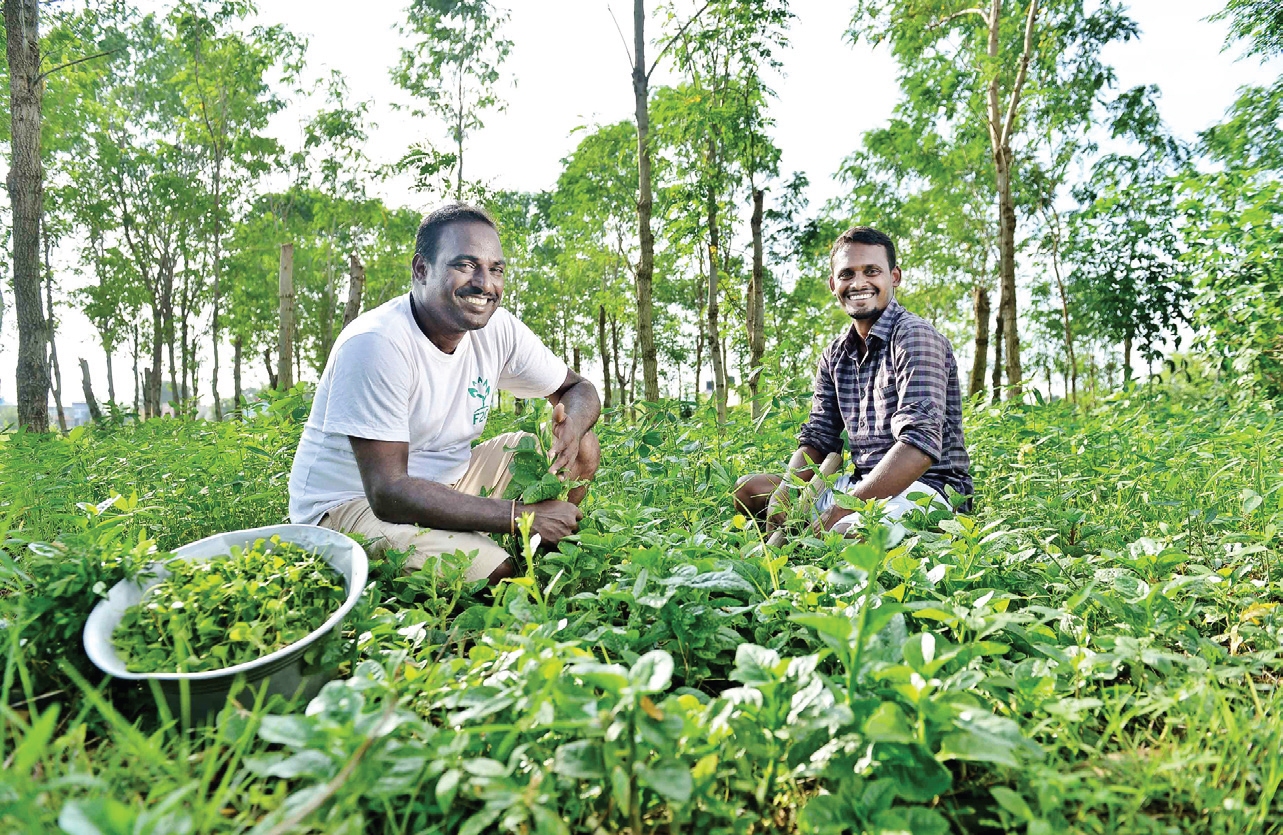
After practicing natural farming for 5 years, he gained the confidence to educate different farmers in the nearby district of Vikramgad. He commenced training 4 Adivasi farmers, and now the wide variety stands at 70. Not simplest did Venkat educate them on the techniques of natural farming, but he also devised advertising channels and selling points for their produce. Today, most of these farmers aren’t the handiest at earning more, but are also producing more with limited resources.
An inspiring journey
Venkat becomes very excited to grow his own food after shifting to Peth. Since many farmers inside the region have been developing moong (green lentils), Venkat is determined to follow in their footsteps. He made a short experience to Surat in Gujarat to shop for seeds seeing that he heard from oldsters that the town had the quality of seeds.
Very quickly, he becomes on the sphere tilling, sowing, watering, and weeding. A few days later, he became a status inside the middle of the moon vegetation with inexperienced pods hanging from them. “It became one of the ecstatic emotions ever. It was 5 months because I ceased my task, but I felt the transition changed into growing fruitful,” Venkat quips.
At the cease of the harvest, Venkat had grown 300 kilograms of moong. Even after distributing it to his buddies, he was left with a big amount of the heartbeat. Hence, he started out promoting the products to retail shops in Mumbai. The market for organic items was nevertheless very nascent, and a maximum of the providers were not inclined to pay him more than Rs 16 in step with kilogram. Astonishingly, the equal moong was bought at Rs 30 and above inside the market.
“I no longer had a preference but to finalize the deal with the shops. From then on, I tried promoting through numerous channels of distribution from specialized organic outlets like Navdanya and Green Current to local companies in Mumbai. Alas, I in no way was given a truthful rate for my produce. That changed when I realized the sort of hardship the farmers go through in India. Though the cost of labor, equipment, and different resources is borne by farmers, most profits are pocketed with the aid of the traders and intermediaries who actually p.C. The material and promote them to city dwellers,” Venkat explains.
5 years later, Venkat turned into growing many more forms of vegetation like rice, toor dal (pigeon peas), sesame seeds, groundnuts, mustard, basil leaves, bitter gourd, tomato, pumpkin, and lady’s finger. In 2009, Venkat commenced Hari Bhari Tokri, an assignment to establish marketing channels for farmers. With the help of some buddies and Dr. ML Dhawale Memorial Trust (a charitable enterprise running inside the healthcare area), he formed the Mumbai Organic Farmers and Consumers Association (MOFCA). The association’s goal changed to offer a voice to the rural areas and permit them to break far from intermediaries’ shackles.
Despite toiling day and night, the majority of the farmers within the vicinity were residing in abject conditions. My urge to paint for his or her welfare had accelerated through the years. I desired to do something to make their lives higher. I was given the task of educating 4 Adivasi farmers in organic farming techniques. Besides that, I began supporting them to promote their products for an awesome fee,” says Venkat.
Venkat partnered with companies and clients because the price of vegetables and pulses is determined using the farmers. For example, if the farmer wants to sell bitter gourd at Rs 30 in keeping with kilogram, the vendor could pay the same, then the farmer adds the value of handling, shipping, as well as a percentage of profit before promoting it to the client. When it comes to the transport of the harvested fabric to Mumbai clients, MOFCA, together with Hari Bhari Tokri, provided the necessary logistics in this kind of manner that the price of it turned into transferred to the client.